Choosing the right baler is one of the most important decisions for any recycling center, warehouse, manufacturing plant, supermarket, or waste management company. The right machine can dramatically reduce waste handling costs, improve workplace safety, and increase recycling efficiency.
One of the most common questions buyers ask is:
Should I choose a manual tie baler or an auto-tie baler?
At first glance, both machines perform the same basic function — compressing recyclable materials into compact bales. However, the differences in automation, labor requirements, throughput, cost, and long-term efficiency can significantly affect your operation and profitability.
At Makabale, we have helped customers in many countries select the ideal baling solution for their business. In this complete buyer’s guide, we’ll explain the key differences between manual tie balers and auto-tie balers, including advantages, disadvantages, costs, and the best applications for each type.
1. What Is a Manual Tie Baler?
A manual tie baler compresses recyclable material into a bale, but the operator must manually secure the bale using:
- Steel wire
- Polyester strapping
- Plastic ties
- Rope
After compression is completed, the operator ties the bale before ejecting it from the chamber.
Manual tie systems are commonly used in:
- Small businesses
- Retail stores
- Warehouses
- Hotels
- Small recycling facilities
- Warehouses
Makabale offers both:
- Vertical manual tie balers
- Semi-automatic horizontal balers
These systems are cost-effective and reliable for lower-volume applications.
2. What Is an Auto-Tie Baler?
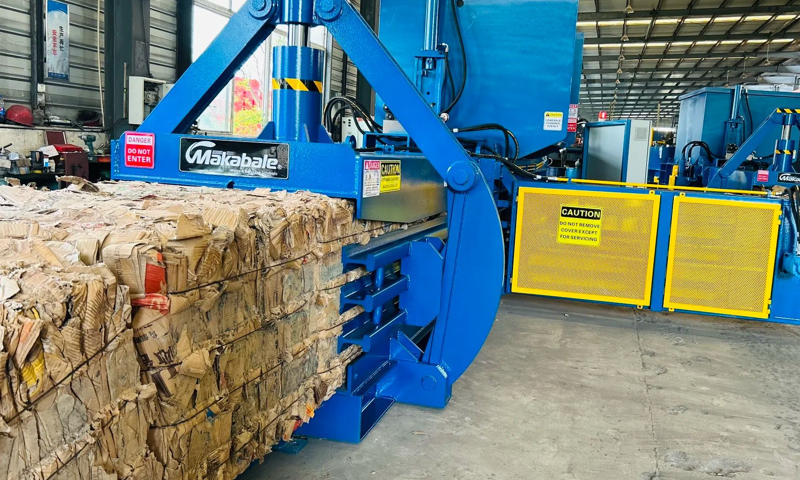
An auto-tie baler automatically ties the bale once the compression cycle is complete. Operators do not need to manually secure the bale.
The machine:
- Compresses the material
- Measures bale density and size
- Automatically feeds tying wire
- Secures the bale
- Ejects the finished bale
Auto-tie systems are usually:
- Fully automatic horizontal balers
- Conveyor-fed systems
- Integrated into large recycling lines
Makabale auto-tie balers are widely used in:
- Recycling centers
- Logistics hubs
- Manufacturing plants
- Municipal waste facilities
- Large-scale cardboard recycling operations
3. Main Differences Between Manual Tie and Auto-Tie Balers
| Feature | Manual Tie Baler | Auto-Tie Baler |
| Bale Tying | Manual | Automatic |
| Labor Requirement | High | Low |
| Processing Speed | Medium | Very High |
| Operator Involvement | Constant | Minimal |
| Initial Cost | Lower | Higher |
| Maintenance Complexity | Simple | More advanced |
| Ideal Waste Volume | Low to medium | High volume |
| Automation Level | Basic | Advanced |
| Production Flow | Stop-and-start | Continuous |
| Best For | Small businesses | Industrial recycling |
4. Advantages of Manual Tie Balers
4.1 Lower Initial Investment
One of the biggest advantages of manual tie balers is affordability.
For businesses with:
- Limited budgets
- Small waste volumes
- Basic recycling needs
A manual tie baler offers excellent value.
Typical Applications:
- Small supermarkets
- Retail stores
- Pharmacies
- Hotels
- Small warehouses
Makabale vertical manual tie balers provide professional-grade compression at a lower upfront cost.
4.2 Simple Operation
Manual tie balers are easy to operate and require minimal training.
Operators simply:
- Load material
- Start compression cycle
- Tie bale manually
- Eject bale
This simplicity makes them ideal for businesses without dedicated recycling staff.
4.3 Lower Maintenance Costs
Manual tie systems contain:
- Fewer sensors
- Simpler hydraulics
- Less automation hardware
This results in:
- Easier repairs
- Lower servicing costs
- Less downtime
Makabale manual tie balers are engineered with durable hydraulic systems designed for years of dependable operation.
4.4 Compact Footprint
Most manual tie balers are vertical designs requiring minimal space.
This makes them ideal for:
- Store backrooms
- Loading docks
- Tight warehouse spaces
Some Makabale compact balers require less than 1.5 square meters of floor space.
5. Disadvantages of Manual Tie Balers
Despite their affordability, manual tie balers also have limitations.
5.1 Higher Labor Requirement
Operators must:
- Monitor the machine
- Tie each bale manually
- Handle bale ejection
As waste volume increases, labor costs rise significantly.
5.2 Slower Production
Manual tying interrupts production between every bale.
This creates:
- Lower throughput
- More downtime
- Reduced operational efficiency
For high-volume facilities, manual systems quickly become bottlenecks.
5.3 Inconsistent Bale Quality
Manual tying can result in:
- Uneven bale density
- Variable bale size
- Reduced transport efficiency
Export buyers and large recyclers often prefer highly consistent bales.
6. Advantages of Auto-Tie Balers
6.1 Maximum Productivity
Auto-tie balers are designed for:
- Continuous operation
- Conveyor-fed systems
- High-volume material streams
Makabale auto-tie balers can process:
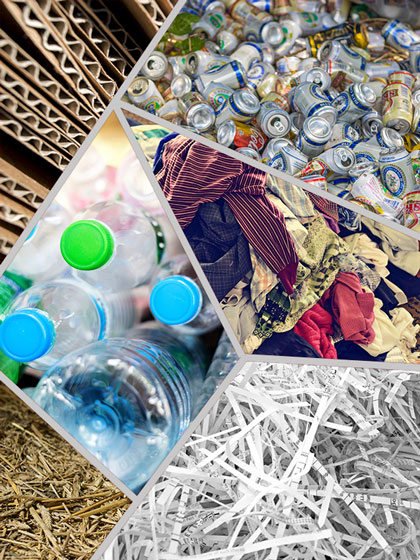
- Cardboard
- Paper
- Plastic film
- Textiles
- Mixed recyclables
with minimal interruption.
6.2 Major Labor Savings
One operator can often supervise an entire automated recycling line.
This dramatically reduces:
- Staffing costs
- Manual handling
- Operator fatigue
Makabale Insight:
Many customers reduce labor requirements by 50–70% after upgrading to auto-tie systems.
6.3 Faster Throughput
Auto-tie systems eliminate the need to stop for tying.
This allows:
- Faster bale production
- Continuous conveyor feeding
- Higher daily processing capacity
Some Makabale heavy-duty systems process 30–50 tons per day.
6.4 Consistent Bale Quality
Auto-tie systems produce:
- Uniform bale dimensions
- Higher bale density
- Better stacking capability
This improves:
- Export efficiency
- Transportation savings
- Recycling resale value
6.5 Better Workplace Safety
Automatic systems reduce operator interaction with:
- Moving parts
- Compression chambers
- Wire handling areas
Makabale auto-tie balers include:
- Safety guarding
- Emergency stop systems
- PLC fault detection
- Hydraulic overload protection
7. Disadvantages of Auto-Tie Balers
7.1 Higher Initial Cost
Auto-tie balers are significantly more expensive due to:
- Automation systems
- PLC controls
- Wire-tying mechanisms
- Conveyor integration
However, for high-volume users, long-term savings usually outweigh the upfront investment.
7.2 Larger Space Requirements
Most auto-tie balers are horizontal systems requiring:
- More installation area
- Conveyor access
- Larger electrical supply
Makabale engineers assist customers with layout planning before installation.
7.3 More Advanced Maintenance
Automated systems contain:
- Sensors
- Electronics
- Wire-tying units
- Advanced hydraulics
Regular preventive maintenance is essential for peak performance.
8. Which Industries Prefer Each Type?
Manual Tie Baler Industries
- Retail stores
- Hotels
- Restaurants
- Small warehouses
- Small farms
- Textile workshops
Auto-Tie Baler Industries
- Recycling centers
- Logistics hubs
- Distribution centers
- Manufacturing plants
- Municipal recycling operations
- Large cardboard recycling facilities
9. Cost Comparison & ROI
| Cost Factor | Manual Tie Baler | Auto-Tie Baler |
| Initial Investment | Low | High |
| Labor Cost | Higher | Lower |
| Maintenance Cost | Low | Moderate |
| Processing Capacity | Medium | High |
| ROI Timeline | 12–24 months | 18–36 months |
Example:
A recycling facility processing 25 tons/day may save:
- Thousands in labor annually
- Reduced transport costs
- Faster material throughput
by upgrading from manual to auto-tie systems.
10. Real-World Makabale Case Studies
Case Study 1 — Retail Distribution Center
Location: Mexico
Challenge: Increasing cardboard waste volume
Solution: Upgraded from vertical manual tie baler to Makabale auto-tie horizontal baler
Results:
- Labor reduced by 60%
- Processing speed doubled
- Bale density improved by 35%
Case Study 2 — Small Supermarket Chain
Location: Poland
Challenge: Limited space and moderate cardboard volume
Solution: Installed Makabale vertical manual tie balers
Results:
- Waste hauling costs reduced by 45%
- Compact installation fit store backrooms
- ROI achieved within 15 months
11. How to Choose the Right Baler for Your Business
Choose a Manual Tie Baler if:
Your waste volume is moderate
You have limited space
Your budget is smaller
You prefer simple operation
Choose an Auto-Tie Baler if:
You process large daily volumes
Labor costs are high
You need continuous operation
You require export-grade bale consistency
12. Frequently Asked Questions (FAQ)
Q1: Can I upgrade from manual tie to auto-tie later?
Yes. Makabale offers scalable systems that allow businesses to upgrade as waste volumes increase.
Q2: Which system has lower maintenance costs?
Manual tie balers generally have lower maintenance costs due to simpler mechanical systems.
Q3: Are auto-tie balers worth the investment?
For high-volume facilities, absolutely. Labor savings and productivity gains usually justify the investment quickly.
Q4: Can both systems handle cardboard and plastic?
Yes. Makabale balers can process multiple recyclable materials depending on machine configuration.
Conclusion
Both manual tie and auto-tie balers offer valuable benefits — but the right choice depends on your:
- Waste volume
- Budget
- Available labor
- Facility size
- Long-term growth plans
For small and medium businesses, a manual tie baler provides affordable, reliable waste compression.
For industrial recycling operations, an auto-tie baler delivers superior productivity, automation, and long-term efficiency.
With over 20 years of global manufacturing experience, Makabale can help you choose the ideal baler solution tailored to your operation.
Contact Makabale Today
Looking for the perfect baler for your facility? Contact us today. Our engineering team is ready to help.