Why Automation Matters in Modern Recycling
As recycling volumes continue to rise worldwide, recycling centers are under pressure to process more material faster, safer, and with fewer labor resources. Manual waste handling methods that worked ten years ago are no longer efficient or competitive in 2026.
This is where the auto-tie baler becomes essential.
An auto-tie baler is designed for continuous, high-volume waste processing, automatically compressing and tying bales without manual intervention. For large recycling centers, logistics hubs, and industrial waste processors, auto-tie balers are no longer a luxury — they are a necessity.
At Makabale, we have spent more than two decades engineering heavy-duty auto-tie balers for clients all over the world. In this guide, we explain what auto-tie balers are, why they outperform manual systems, and how to determine if one is right for your operation.
1. What Is an Auto-Tie Baler?
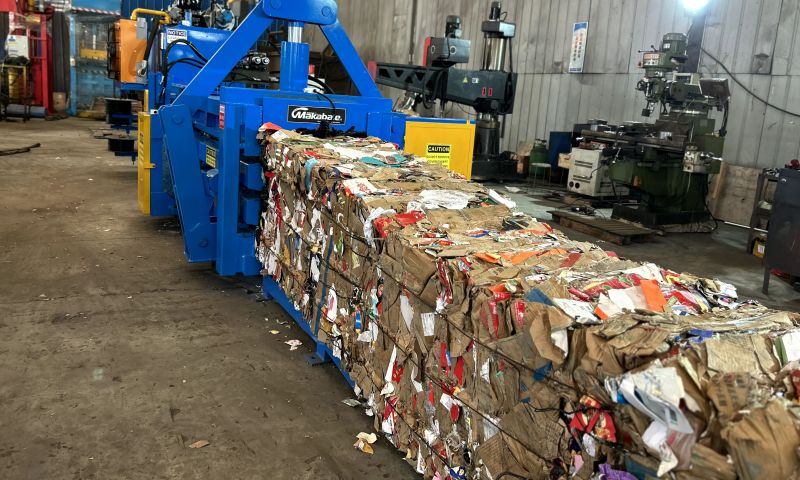
An auto-tie baler is a type of horizontal baler equipped with an automatic wire-tying or strapping system. Unlike manual or semi-automatic balers, the machine completes the entire baling cycle autonomously:
- Material is fed continuously (manually, by hopper, or conveyor)
- Hydraulic ram compresses the material
- Bale reaches preset density and length
- Machine automatically ties the bale
- Finished bale is discharged without stopping production
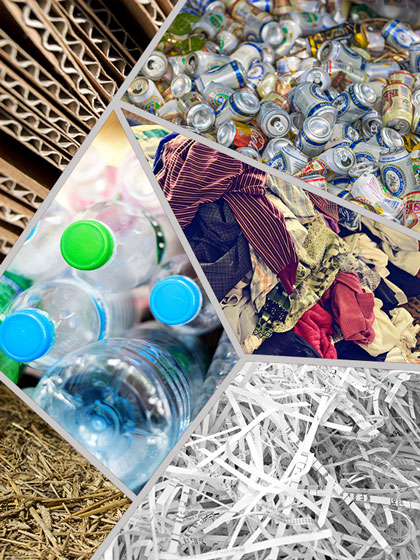
Common Materials Processed
- Cardboard and OCC
- Mixed paper
- Plastic film
- Textiles and fiber waste
- Light metals (with suitable configuration)
Makabale auto-tie balers are designed to handle multi-material recycling streams with consistent bale quality.
2. Why High-Volume Recycling Centers Need Auto-Tie Balers
High-volume facilities face unique challenges:
- Continuous waste flow
- Labor shortages
- Rising operating costs
- Strict bale quality requirements from buyers
Manual or vertical balers simply cannot keep up with these demands.
Auto-tie balers solve these problems by:
- Eliminating manual tying labor
- Increasing hourly throughput
- Reducing downtime between bales
- Producing uniform, export-grade bales
Makabale Insight:
For facilities processing more than 20–30 tons of recyclables per day, an auto-tie baler can reduce labor costs by 40–70% compared to manual systems.
3. Key Advantages of Auto-Tie Balers
3.1 Continuous, Non-Stop Operation
Auto-tie balers are designed for 24/7 industrial use. Unlike manual balers, they do not need to stop for:
- Bale tying
- Operator repositioning
- Chamber clearing
This allows recycling centers to maintain constant material flow, which is critical when feeding from conveyors or shredders.
Makabale auto-tie balers feature:
- High-cycle hydraulic systems
- Industrial-grade PLC controls
- Reinforced compression chamber
3.2 Significant Labor Cost Reduction
Manual tying requires skilled operators and creates bottlenecks. Auto-tie systems:
- Remove the need for operators to enter the baling area
- Allow one operator to oversee multiple machines
- Reduce workplace injuries related to manual tying
Typical Labor Savings:
- Manual system: 2-3 operators per shift
- Auto-tie system: 1 operator per shift
Over one year, this can translate into tens of thousands of dollars in savings.
3.3 Higher Bale Density & Consistency
Recycling buyers and exporters demand uniform bale size and density. Inconsistent bales can result in:
- Rejected shipments
- Lower resale prices
- Increased transport costs
Makabale auto-tie balers use:
- Adjustable compression pressure
- Programmable bale length control
- Precision wire-tying systems
The result is high-density, export-ready bales that meet international standards.
3.4 Improved Safety
Safety is a major concern in high-volume facilities. Auto-tie balers dramatically reduce operator exposure to:
- Moving parts
- High-pressure zones
- Wire handling injuries
Makabale safety features include:
- Full enclosure guarding
- Emergency stop systems
- Automatic fault detection
- Hydraulic overload protection
- CE compliant designs
3.5 Lower Cost per Ton Processed
Although auto-tie balers have a higher initial investment, the cost per ton processed is significantly lower due to:
- Reduced labor
- Faster processing
- Lower downtime
- Reduced maintenance interruptions
Makabale ROI Data:
Most high-volume recycling centers recover their investment in 18–30 months, depending on material volume and labor costs.
4. Auto-Tie Baler vs Manual Tie Baler
Here's a clear comparison:
| Feature | Manual Tie Baler | Auto-Tie Baler |
| Operation | Intermittent | Continuous |
| Labor Required | High | Low |
| Throughput | Medium | Very High |
| Bale Consistency | Variable | Uniform |
| Safety Level | Moderate | High |
| Automation | Low | High |
| Best For | Small operations | Large recycling centers |
5. Integration with Shredders & Conveyors
Auto-tie balers excel in integrated recycling systems.
Makabale auto-tie balers can be combined with:
- Conveyor belts
- Sorting lines
- Trommel screens
- Industrial shredders
- Optical sorting systems
This creates a fully automated waste processing line, capable of handling massive volumes with minimal human intervention.
6. Energy Efficiency & Sustainability
Modern auto-tie balers are designed to maximize energy efficiency.
Makabale systems use:
- Variable-displacement hydraulic pumps
- Energy-saving standby modes
- Optimized compression cycles
Environmental benefits include:
- Reduced transport emissions (denser bales)
- Higher recycling recovery rates
- Lower landfill contribution
- Support for ESG and sustainability goals
7. Maintenance & Reliability
High-volume facilities cannot afford breakdowns.
Makabale auto-tie balers are engineered with:
- Heavy-duty cylinders
- Wear-resistant liners
- Modular tying systems
- Easy-access maintenance panels
Routine maintenance typically includes:
- Weekly lubrication checks
- Monthly wire system inspection
- Biannual hydraulic servicing
With proper maintenance, Makabale auto-tie balers regularly operate for 10–15 years is common.
8. Is an Auto-Tie Baler Right for You?
You should strongly consider an auto-tie baler if:
- You process large volumes daily
- You operate conveyor-fed systems
- Labor availability is limited
- You sell recyclables to large buyers or exporters
- You want long-term cost efficiency
If your volume is still growing, Makabale also offers scalable systems that can be upgraded from semi-automatic to fully automatic.
9. Frequently Asked Questions (FAQ)
Q1: What materials can auto-tie balers handle?
Cardboard, paper, plastics, textiles, and light metals (model dependent).
Q2: Do auto-tie balers require special operators?
Basic training is sufficient. Makabale provides full training and documentation.
Q3: Can Makabale customize bale size and density?
Yes. We tailor machines to buyer and transport requirements.
Q4: How long does installation take?
Typically 3–7 days, depending on system complexity.
Conclusion: The Smart Choice for High-Volume Recycling
For high-volume recycling centers, auto-tie balers deliver unmatched efficiency, safety, and long-term savings. While the upfront cost is higher, the operational advantages quickly outweigh the investment.
With more than 20 years of experience and exports to overseas market, Makabale is a trusted global partner for advanced baling solutions — from standalone machines to fully automated recycling lines.
Ready to Upgrade Your Recycling Operation?
Contact Makabale today for a customized auto-tie baler solution designed for your material, volume, and facility layout.